
- Football News
- Transfer Updates
- Football News
- Transfer Updates
Tennis News“Australian Open Shock: Raducanu and Draper Charge Into Melbourne as Boulter Suffers Heartbreaking Exit!”
Peter GraceDecember 12, 20253 Mins read

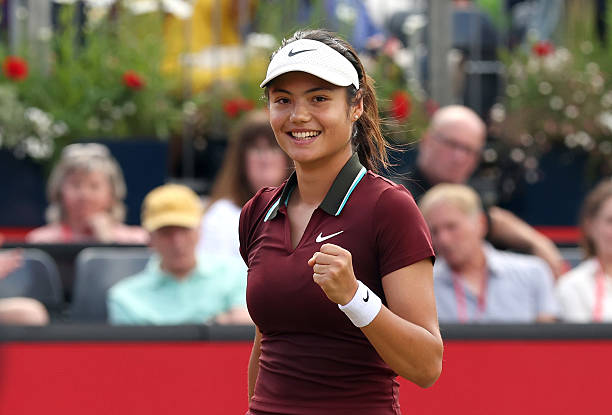
The Australian Open, bathed in its cruel and beautiful summer sun, is a tournament of brutal collisions. Not just between racket and ball, but between dream and reality, between the fairy tale and the cold, hard floor. On a day that crackled with both lightning-bolt breakthroughs and gut-punch exits, the story wasn’t in the scores. It was in the silent, fist-pump roar of Emma Raducanu, the staggering, physical declaration of Jack Draper, and the devastating, solitary tears of Katie Boulter. This is the real, unvarnished narrative—a triptych of hope, force, and heartbreak that shows what it truly costs to step onto this stage.
The Raducanu Renaissance: Smiling Through the Wall
Let’s be brutally honest: since that scarcely believable US Open fairytale in 2021, the world watched Emma Raducanu not as a player, but as a fragile artifact. Every injury timeout was a “setback.” Every loss was a “crisis.” The narrative was a suffocating blanket: brilliant but breakable. Her “weakness” wasn’t her backhand; it was her own seismic success and the broken body that seemed to betray her for it.
That’s why her charge into Melbourne isn’t just about wins. It’s about the smile. It’s the unburdened, fierce grin after a punishing rally, the relaxed shoulders between points. This isn’t the wide-eyed girl from New York; this is a young woman who has stared into the abyss of expectation and injury, and has decided to play for herself again. She’s moving with a freedom we haven’t seen in two years. Each powerful groundstroke isn’t just a shot; it’s a declaration of independence from her own history. The “glaring weakness” we thought was her physique was perhaps just the immense weight of a legend she never asked for. She’s not just winning matches; she’s winning back her own story, point by painful, exhilarating point. Melbourne isn’t witnessing a comeback; it’s witnessing an emancipation.
The Draper Doctrine: A Force of Nature, Finally Unleashed
If Raducanu’s journey is psychological, Jack Draper’s is profoundly, intimidatingly physical. For years, the conversation around the powerful Brit was punctuated with a sad, predictable caveat: “If he can stay fit…” It was the story of a Ferrari engine in a chassis that kept failing its MOT. His talent was never in doubt, but his body seemed to conspire against his fury.
No more. His charge in Melbourne feels different. This isn’t a flash of brilliance; it’s a sustained roar. He is bullying opponents, not just with his thunderous lefty serve and murderous forehand, but with a terrifying, newfound physical solidity. He looks like he’s carved from the same granite as the Melbourne courts. Every match is a statement of intent: the “if” is being systematically erased. He is no longer a prospect; he is a present and clear danger. He is playing with the aggrieved energy of a man who has lost years to physio rooms and is here to collect, with interest, from anyone in his path. The tour has been put on notice: a fully-fit Jack Draper isn’t just a good player, he’s a punishing ordeal.
The Boulter Heartbreak: The Agony of the Almost
And then, there is Katie Boulter. In the cruel zero-sum game of a Grand Slam, for every charge, there is a crushing halt. Boulter’s exit was not just a loss; it was a haunting masterpiece of “what if?” She wasn’t blown off the court; she was picked apart in a agonizing, three-set thriller where momentum swung like a pendulum over a cliff.
This is the dark side of the day’s euphoria that we so often gloss over. This is the reality for the vast majority, even those ranked inside the world’s top 50. The “heartbreaking exit” headline barely scratches the surface. It’s in the thousand-yard stare during the final changeover, knowing the dream is slipping away. It’s in the physical and emotional investment of an entire offseason—the early mornings, the sacrificed moments, the ice baths, the belief—all crystallizing into a single missed passing shot or a line call gone against you. Her tears afterwards weren’t of anger, but of sudden, profound loss. The tournament goes on, the sun continues to beat down, but for her, Melbourne turns grey and quiet in an instant. This is the brutal contract of professional sport: someone’s breakthrough is always, always, someone else’s breaking point.
The Melbourne Triptych
Together, these three stories form the complete, emotionally raw picture of professional tennis. Raducanu represents the battle against the external narrative, the fight to reclaim your own identity. Draper embodies the battle against one’s own physical limits, the triumph of perseverance over pain. Boulter personifies the battle against fine margins, the heartbreaking reality that elite sport is a realm of devastating nuance.
The Australian Open shock isn’t that these things happened—it’s that they happen simultaneously, on the same stretch of asphalt, under the same unforgiving sun. It’s a reminder that for every viral highlight reel of victory, there is a silent, private moment of despair. For every smile that signals a soul set free, there is a tear that carries the weight of a world. This is the real, un-clickbait truth of Melbourne: it’s not just a tournament of champions, but a raw, beautiful, and brutal theatre of the human spirit in all its resilient and vulnerable glory.
Related Articles
“Written Off Too Soon? Emma Raducanu’s Emotional Comeback Plan Could Shock the Tennis World!”
For a player who once stunned the world with a fairytale rise,...
“Emma Raducanu’s American Redemption Tour: Can the ‘Sunshine Double’ Spark the Comeback the Tennis World Is Waiting For?”
There’s something symbolic about returning to the United States for a fresh...
“Emma Raducanu Is Back in Melbourne—and This Australian Open Run Could Redefine Her Career”
There’s something different about Emma Raducanu at the 2026 Australian Open. It’s...
How Coco Gauff Became a MILLION-DOLLAR Brand at Just 21 — The Untold Hustle Behind the Fame!
At just 21, Coco Gauff isn’t only a tennis phenom — she’s...
- Transfer Updates
- Transfer Updates



























Leave a comment