
- Football News
- Transfer Updates
- Football News
- Transfer Updates
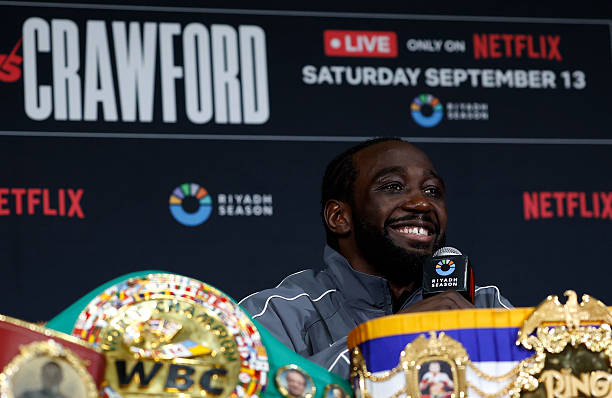
Boxing Celebrity News“Everyone Wants Him to Walk Away Forever—But Crawford’s Next Chapter Starts Right at Home”
Peter GraceDecember 29, 20253 Mins read

There comes a moment in every successful life when the applause fades, the spotlight softens, and the most powerful voices are no longer coming from fans or critics—but from family. For Crawford, that moment has arrived, and it’s reshaping everything about how his future is being written.
Behind the scenes, those closest to him have been unusually vocal. Not demanding. Not dramatic. Just honest. Family conversations that once revolved around ambition and achievement have shifted toward something far more intimate: health, peace, and the value of stepping away while the story is still golden. Many who hear these conversations interpret them as a clear wish—stay retired, protect what you’ve built, and enjoy the life you’ve earned.
And it’s hard to argue with that logic.
Crawford has already climbed the mountain most people never even approach. The grind, the pressure, the physical toll—it all came at a cost, and his family saw it up close. They watched the sacrifices that the public never notices. The long recoveries. The quiet moments of exhaustion. The weight that success places on a body and a mind over time. Their message isn’t about fear; it’s about preservation.
Yet retirement, even when it’s wise, is rarely simple.
For someone like Crawford, identity doesn’t switch off just because the schedule clears. Purpose doesn’t vanish because the calendar is suddenly empty. And that’s where the story becomes less about walking away—and more about staying rooted.
Crawford never left.
While others chase new beginnings in bigger cities or quieter retreats, he chose something different. He stayed home. Omaha, Nebraska—the place that shaped him before the world knew his name—remains his anchor. It’s not nostalgia. It’s intention. Omaha isn’t just where he lives; it’s where his life makes sense without the noise.
That connection was on full display recently when Crawford returned to the spotlight—not for competition, not for comeback rumors, but for meaning. As the keynote speaker at the University of Nebraska–Omaha’s 2025 graduation, he stood before a generation on the edge of their own uncertain futures. No scoreboards. No pressure. Just a man who had lived fully, speaking honestly about what comes after achievement.
And the message landed.
Because Crawford’s story resonates in a way that statistics never could. He represents what it looks like to succeed without forgetting where you came from. To win without losing yourself. To know when to push—and when to protect your health, your family, and your peace.
Graduates didn’t just see a hometown hero; they saw a future version of themselves. Someone who proved that success doesn’t always mean moving on. Sometimes it means staying put and growing deeper instead of wider.
This is why the family influence matters so much. They aren’t closing doors for Crawford. They’re reminding him that the most important doors are already open. A healthy life. A respected legacy. A community that doesn’t need him to perform to be proud of him.
And Omaha feels that pride deeply.
In coffee shops, classrooms, and quiet neighborhoods, Crawford isn’t a headline—he’s one of their own. The applause he receives there isn’t loud, but it’s lasting. It doesn’t demand more from him. It thanks him for what he’s already given.
So when people speculate about what’s next, they often miss the point. This isn’t a story about fear of return or hunger for more. It’s about redefining success on personal terms. Listening to the people who love you most. Choosing health over hype. Meaning over momentum.
If Crawford never comes back, his story is complete.
If he does, it will be because he wants to—not because he has something left to prove.
Either way, the heart of his journey hasn’t changed. It lives in Omaha. It speaks through family. And it reminds us all that sometimes the bravest move isn’t pushing forward—but knowing when to stand still and live well.
That’s not retirement.
That’s legacy.
Related Articles
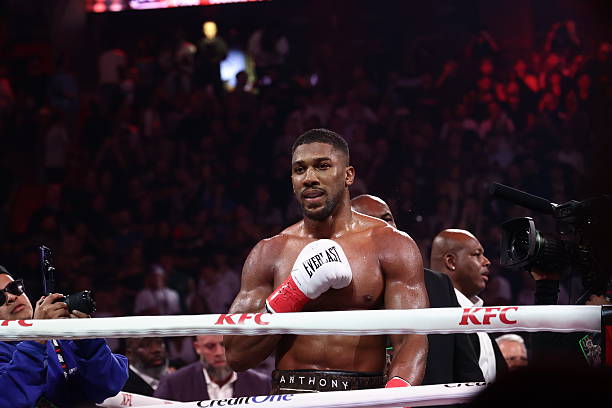
“After Death, Pain, and Months Away From Boxing — Anthony Joshua Is Finally Returning, and the World Is Watching”
For months, the boxing world wondered if Anthony Joshua would ever truly...
“From Boxing King to Career Collapse? Gervonta Davis’ Stunning Fall Leaves Fans Shocked and the Lightweight Division in Chaos”
For years, Gervonta Davis looked untouchable. Explosive power. Sold-out arenas. Viral knockouts....
“$10,000 Bet, Brutal Honesty, and a Surprise Gym Visit—Terence ‘Bud’ Crawford Is Stirring Chaos Without Throwing a Punch!”
In a sport where silence can be strategic and words can ignite...
“I’D RATHER RETIRE THAN RELIVE THAT NIGHT!” Canelo’s Chilling Confession as Crawford Holds the Pen on a $100M Rematch—But a Secret Weight Class Twist Changes Everything.
The air in the high-rise boardroom was thick enough to cut with...
- Transfer Updates
- Transfer Updates

















Leave a comment