
- Football News
- Transfer Updates
- Football News
- Transfer Updates
Tennis News“Emma Raducanu Is Back in Melbourne—and This Australian Open Run Could Redefine Her Career”
Peter GraceJanuary 20, 20263 Mins read

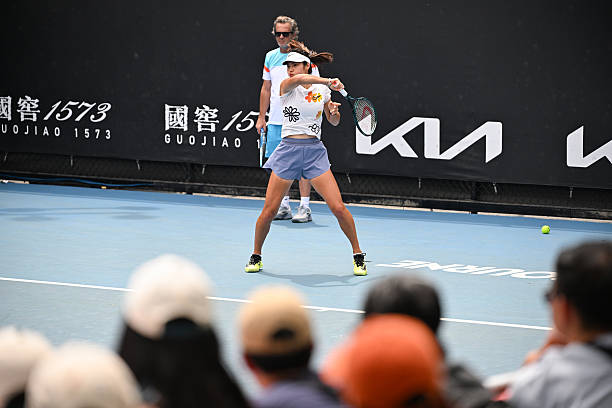
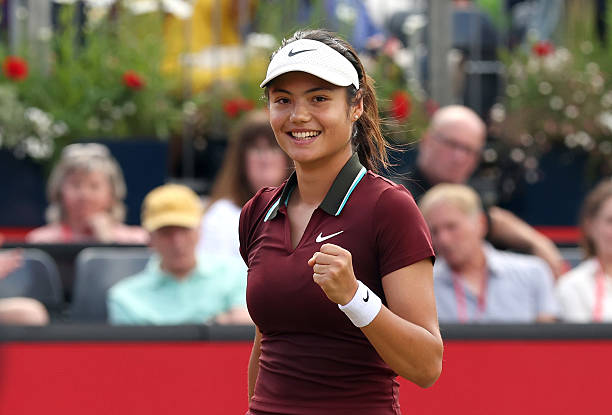
There’s something different about Emma Raducanu at the 2026 Australian Open. It’s not just the ranking next to her name, or the seed number, or even the scorelines. It’s the way she’s moving, reacting, and competing—calmly, deliberately, and with a sense of belief that feels earned rather than hoped for.
As the British No. 1 and the tournament’s No. 28 seed, Raducanu arrived in Melbourne carrying expectations, but also carrying something far heavier: the question of whether her body and game were finally ready to withstand the demands of the tour again. One match in, she has already started to answer that question.
A Slow Start, Then a Statement
Raducanu’s opening-round match on January 18 didn’t begin like a fairytale. Against Thailand’s Mananchaya Sawangkaew, she found herself trailing early, struggling to find rhythm as her opponent played freely and without fear. On Margaret Court Arena, it would have been easy for frustration to creep in.
Instead, Raducanu reset.
From 1–3 down in the first set, she tightened her footwork, raised her intensity, and gradually took control of the rallies. The result—6-4, 6-1—looked comfortable on paper, but it told a deeper story. This wasn’t a flash of brilliance. It was measured problem-solving. It was patience. It was a player who trusted herself enough to stay composed when things weren’t perfect.
That composure may be the most important sign of all.
Finding Her Feet—Literally and Figuratively
The months leading into Melbourne were anything but smooth. A bone bruise in her right foot disrupted Raducanu’s pre-season and forced her to withdraw from a high-profile United Cup match earlier in the month. For a player whose career has been repeatedly interrupted by injuries, every setback feels magnified.
Yet after her first-round win, Raducanu spoke with clarity and relief. She admitted she is finally “finding her feet” again—both physically and mentally. That phrase matters. It suggests grounding. Stability. A sense that her body is no longer something she has to fight against every time she steps on court.
Now ranked World No. 29, her highest position since late 2022, Raducanu isn’t chasing a miracle comeback. She’s rebuilding, layer by layer.
A New Coach, A Long-Term Vision
Perhaps the most significant shift in Raducanu’s 2026 season isn’t visible during rallies—it’s happening behind the scenes. Working with Francisco Roig, a coach long associated with Rafael Nadal’s team, Raducanu has committed to a long-term project rather than short-term fixes.
The emphasis is clear: tactical clarity, physical robustness, and durability across a full tour schedule.
That mindset marks a departure from the past. This is no longer about quick results or trying to recreate a single historic moment. It’s about becoming a player who can compete week after week, surface after surface, without breaking down.
In Melbourne, that philosophy is already showing. Her movement looks more economical. Her shot selection more disciplined. She’s playing the long game—within matches and within her career.
The Road Ahead Gets Steep—Fast
Raducanu’s second-round match on January 21 will test that progress. She faces Anastasia Potapova, an aggressive opponent who thrives on taking the ball early and disrupting rhythm. It’s the kind of matchup that demands physical resilience and tactical patience—exactly what Raducanu has been working toward.
And looming beyond that is a potential third-round showdown with World No. 1 Aryna Sabalenka.
The possibility alone adds tension. A win over Potapova could send Raducanu into one of the biggest matches of her post-breakthrough career. It would be a measuring stick—not just of form, but of belief.
Late Nights, Loud Fans, and a Viral Moment
Away from the baseline, Raducanu’s Melbourne experience has had its share of human moments. She recently voiced mild frustration with the tournament schedule, revealing she had to practice as late as 11:00 PM to prepare for night-session conditions. It was an honest reminder of the grind that elite tennis demands, especially in a tournament that never truly sleeps.
Then there was “Raddo.”
During her opening match, an Australian superfan’s enthusiastic support—and nickname—caught her attention. Instead of brushing it off, Raducanu leaned into the moment, tracking him down and inviting him to join her guest box for the rest of the tournament. It was warm, spontaneous, and unmistakably Emma.
Not a Comeback—A Continuation
This Australian Open doesn’t feel like a comeback story. It feels like something quieter and more meaningful: continuation.
Emma Raducanu isn’t trying to prove she belongs. She’s acting like she already knows she does. And as Melbourne unfolds, that quiet confidence may be the most dangerous weapon she has.
Related Articles
“Written Off Too Soon? Emma Raducanu’s Emotional Comeback Plan Could Shock the Tennis World!”
For a player who once stunned the world with a fairytale rise,...
“Emma Raducanu’s American Redemption Tour: Can the ‘Sunshine Double’ Spark the Comeback the Tennis World Is Waiting For?”
There’s something symbolic about returning to the United States for a fresh...
“Australian Open Shock: Raducanu and Draper Charge Into Melbourne as Boulter Suffers Heartbreaking Exit!”
The Australian Open, bathed in its cruel and beautiful summer sun, is...
How Coco Gauff Became a MILLION-DOLLAR Brand at Just 21 — The Untold Hustle Behind the Fame!
At just 21, Coco Gauff isn’t only a tennis phenom — she’s...
- Transfer Updates
- Transfer Updates






























Leave a comment