
- Football News
- Transfer Updates
- Football News
- Transfer Updates
Club News“Bruno Fernandes DESTROYS Wolves: Manchester United Run Riot in a Stunning 4-1 Masterclass!”
Peter GraceDecember 9, 20253 Mins read

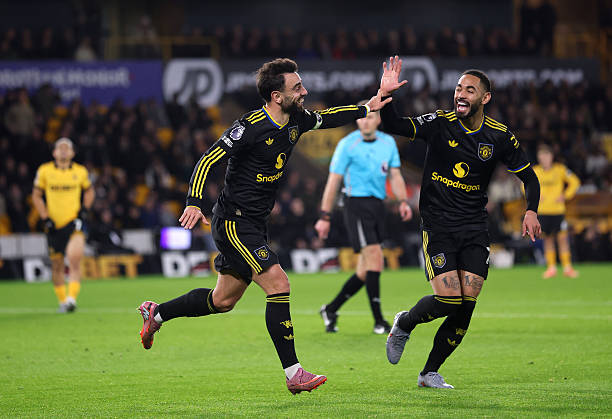
The final whistle blew at Molineux, and the numbers glowed on the scoreboard: Manchester United 4 – 1 Wolves. On social media, the highlights will show you a slick Bruno Fernandes double, a ruthless Rasmus Højlund finish, and a late Kobbie Mainoo masterpiece. The match report will call it a “commanding away victory,” and the pundits will talk about “top four momentum.”
They’re not wrong. But they’re missing the point entirely.
This wasn’t just a win. This was an exorcism. And it didn’t happen with the first goal, or even the second. It happened in the 84th minute, in a moment so quiet, so raw, that if you blinked, you’d have missed the reason your throat tightened.
Let’s set the scene. United were already 3-1 up, the points safe. Wolves, deflated, pushed forward listlessly. The ball rolled out of play near the United dugout, and as a substitute fetched it, the camera panned to Bruno Fernandes. He was bent over, hands on his knees, drenched in sweat. His captain’s armband was slick with it. For a second, he was just a man, utterly spent. Then he straightened up, and his eyes changed.
He wasn’t looking at the celebrating away fans. He wasn’t looking at the scoreboard. He was staring directly at Alejandro Garnacho, who was tracking back on the left flank. Bruno’s arm shot out, his finger pointing with an intensity that cut through the stadium noise. He shouted something—we’ll never know the exact words—but the message was transmitted in pure, unadulterated frequency: “Not yet. We are not done. Our standards are now.”
Garnacho, who had already run himself into the ground, saw it. He didn’t shrug or complain. He nodded, a sharp, military acknowledgment, and broke into a sprint away from the glamour of attack, towards the grind of defence. It lasted ten seconds. It changed everything.
This was the secret whisper that unlocked the roar. For years, we’ve watched United teams—talented, expensive United teams—lead a game and then switch off. We’ve seen them play for themselves, not the badge, not each other. We’ve seen shoulders slump and heads go down. We’ve seen the ghost of lost standards haunt the pitch.
In that pointed finger and that answering sprint, that ghost was laid to rest.
Bruno’s two goals were technically superb, yes. The first, a penalty of cold nerve. The second, a sweeping team move finished with a predator’s instinct. But they were products of this deeper shift. His performance wasn’t measured just in goals and assists; it was measured in yard after yard of relentless, demanding, furious leadership. He played like the captain he has always worn on his arm, but we have only sometimes seen in his heart. He wasn’t just playing Wolves; he was playing against the complacency that has plagued this club.
And then, there was the narrative payoff. In the 93rd minute, with Wolves broken by exactly that relentless pressure, the ball fell to 18-year-old Kobbie Mainoo. He danced past a challenge and curled a shot so pure, so audacious for a teenager sealing a game, that it felt like a promise for the future. That was the fourth goal. That was the fireworks. But the fuse was lit minutes earlier, on that touchline.
The story of Rasmus Højlund’s sharp, instinctive goal is the story of a young striker growing into his skin. The story of the defence, weathering a physical Wolves storm early on, is one of fragile resilience slowly hardening. But the story of the match—the real, beating-heart narrative—is about cultural reset.
This 4-1 victory wasn’t a fluke or a lucky run of form. It was a declaration. A statement that the non-negotiables of effort, accountability, and shared sacrifice are returning. It’s the emotional release for fans who have endured not just defeats, but the humiliation of a lack of effort. Seeing your captain demand more at 3-1 up is more satisfying than any five-goal thrashing of a lesser team.
So, don’t just remember the score. Remember the sweat-stained jersey. Remember the pointed finger. Remember the answering sprint. That’s where Manchester United won. The four goals were just the evidence, finally catching up to a fact we’d all been desperate to feel again: that this team, at long last, might just care as much as we do.
And that’s a feeling worth more than three points. It’s hope, real and undeniable, screaming back to life.
Related Articles
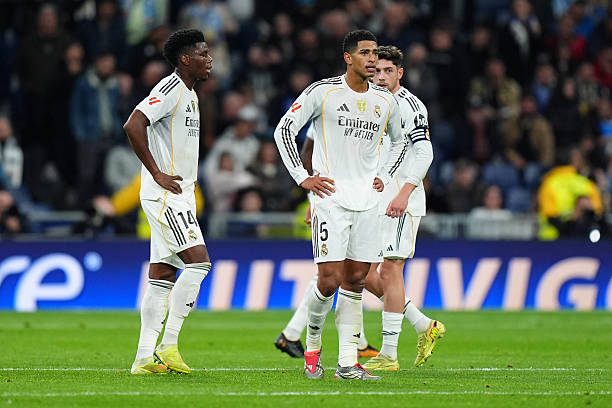
“Bernabéu SHOCKWAVE: Real Madrid Collapse With Nine Men in Stunning 0-2 Defeat to Celta Vigo!”
The cathedral of football, the Santiago Bernabéu, is built for symphonies. It...
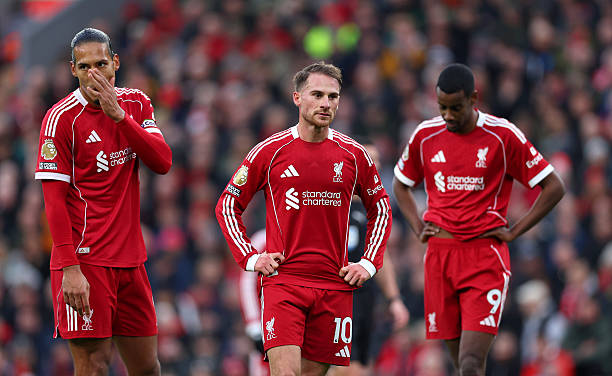
“Liverpool Chaos: Salah’s Shock Exit Rumours Explode as Arne Slot Blames ‘Self-Inflicted Slump’ After Leeds Thriller!”
The final whistle at Anfield wasn’t met with a roar, a groan,...
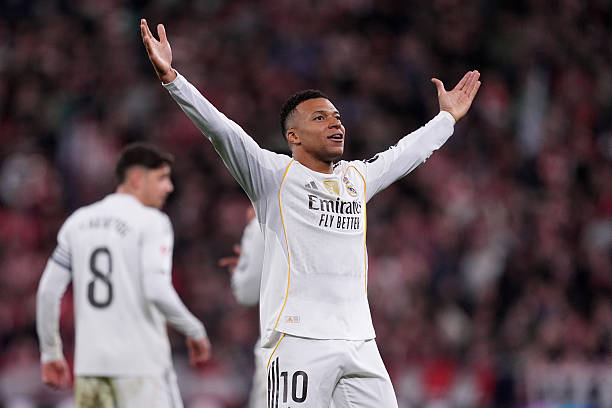
“MADRID ECSTASY TURNS INTO PANIC! Mbappé Brace & Trent’s First Assist Overshadowed by DOUBLE Injury Blow!”
The script was perfect. A tense, simmering night at the Bernabéu. The...
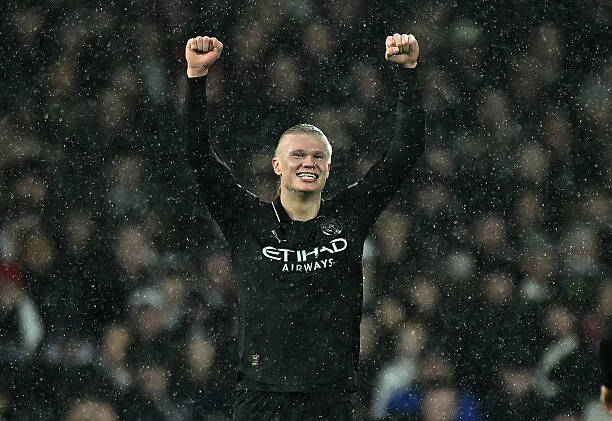
“MADNESS at the Etihad! Haaland Hits 100 as Man City Survive CHAOS in 9-Goal Thriller!”
Haaland Hit 100. Foden Was Flawless. And Pep Guardiola Wanted To Scream....
- Transfer Updates
- Transfer Updates
















Leave a comment