
- Football News
- Transfer Updates
- Football News
- Transfer Updates
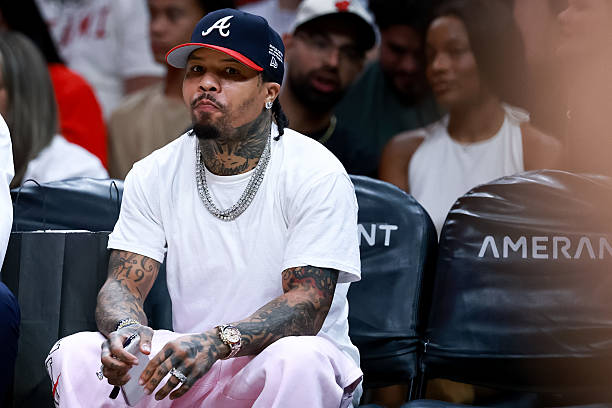
Boxing Celebrity News“From Manhunt to Mugshot: Inside the Arrest That Could Change Davis’ Future Forever”
Peter GraceJanuary 31, 20263 Mins read

For nearly two weeks, his name circulated quietly among law enforcement agencies while the public remained largely unaware. Then, on Wednesday, January 28, 2026, the search ended abruptly in Miami’s Design District—an upscale area better known for art galleries and luxury storefronts than police takedowns.
That was where Davis was finally arrested.
The moment marked the end of a coordinated manhunt led by the Miami Gardens Police Department alongside the U.S. Marshals, but it also marked the beginning of a far more complicated chapter—one that now threatens to unravel much more than his immediate freedom.
The arrest stems from allegations tied to an incident that reportedly occurred on October 27, 2025, at a business in Miami Gardens. According to the charges filed, what began as an encounter between Davis and a former girlfriend escalated into a physical confrontation that authorities now describe in stark terms. The accusations include battery, false imprisonment, and attempted kidnapping—charges that carry serious legal weight and emotional gravity.
What makes this case especially unsettling is not just the nature of the allegations, but the timeline. For months, the incident remained unresolved in the public eye. Then, quietly, law enforcement intensified efforts to locate Davis. By the time he was taken into custody, the search had stretched across two weeks, suggesting investigators believed urgency—and risk—were factors.
His arrest in the Design District was swift and decisive. There was no public spectacle, no dramatic chase. Just the sudden collapse of distance between investigation and consequence.
One day later, on January 29, Davis bonded out of jail.
On paper, that detail may sound like relief. In reality, it offers very little certainty.
Bonding out does not mean resolution. It does not mean vindication. It simply means the legal process will now continue with Davis out of custody—under scrutiny, under conditions, and under the shadow of what comes next.
And what comes next is anything but clear.
The most immediate concern surrounds how these new charges may affect Davis’ existing probation stemming from a 2023 hit-and-run conviction in Baltimore. Probation is fragile by nature. Any new legal trouble—especially allegations involving violence or confinement—can trigger severe consequences, including revocation and incarceration.
At this stage, it remains unclear whether the courts will move to revisit that probation. But the possibility alone raises the stakes dramatically. This is no longer just about defending against new accusations. It’s about whether past mistakes will compound the present crisis.
For Davis, the situation reflects a broader pattern that courts often examine closely: behavior over time. Judges and prosecutors don’t view cases in isolation. They look at trajectories. And right now, the trajectory is under harsh examination.
The alleged victim’s involvement adds another layer of complexity. Cases involving former partners are often deeply emotional, legally intricate, and difficult to navigate publicly. They bring questions of power, trust, and credibility into sharp focus. Regardless of the eventual outcome, these allegations are the kind that leave lasting marks—not just on legal records, but on personal reputations.
Meanwhile, silence dominates from Davis’ side.
There have been no public statements, no social media clarifications, no visible attempts to shape the narrative. That silence may be strategic, advised by counsel, or simply the result of someone grappling with the reality of what lies ahead. Either way, it leaves space for speculation—and in high-profile cases, speculation fills quickly.
What is clear is that the legal process is far from over. Court dates, motions, and hearings will follow. Decisions will be made behind closed doors that could determine whether Davis walks forward cautiously—or is pulled backward into consequences that extend well beyond this single case.
For now, the facts stand starkly.
An arrest after a two-week manhunt.
Serious allegations tied to a past incident.
Release on bond, but not on relief.
And a looming question about probation that could change everything.Miami’s Design District returned to normal within hours of the arrest. Shoppers moved on. Streets cleared. But for Davis, normal no longer exists. His future now rests in a system that moves slowly, deliberately, and without regard for public opinion.
What happens next won’t be decided by headlines—but the weight of those headlines will follow him into every courtroom he enters.
Related Articles
“Fight of the Century Collapses? Tyson Fury vs. Anthony Joshua Suddenly OFF — What Really Happened Behind Closed Doors”
For years, it has been the fight that refused to die. Every...
“He’s the Only Fight That Matters!” — Pitbull Cruz’s Camp Declares War as 2026 Rematch Talks Explode
Boxing doesn’t wait for anyone. Momentum fades. Spotlight shifts. New names rise....
From Doubted to Crowned: How One Night in September Turned Him Into 2025’s Fighter of the Year
On February 13, 2026, the Boxing Writers Association of America made it...
“$100 Million on the Table — and Terence Crawford Still Said No: The Stunning Stand That Shook Boxing”
In a sport where legacies are often sacrificed for one last payday,...
- Transfer Updates
- Transfer Updates



























Leave a comment