
- Football News
- Transfer Updates
- Football News
- Transfer Updates
Boxing Celebrity News“From Mega Fight to Total Fallout: Why the Jake Paul–Gervonta Davis Showdown Exploded Before the Bell!”
Peter GraceDecember 14, 20253 Mins read

He Chose Violence Outside the Ring: How Gervonta Davis’ Alleged Crime Scene Killed His Jake Paul Payday
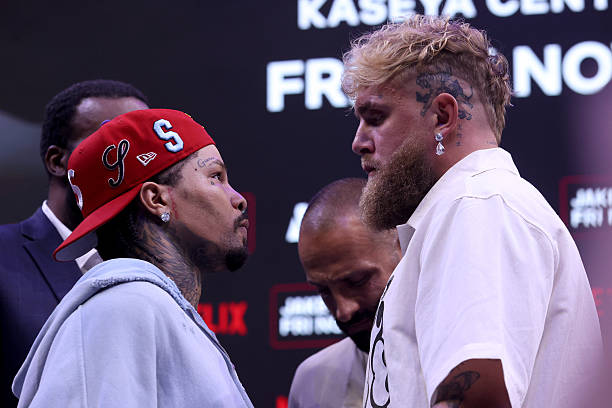
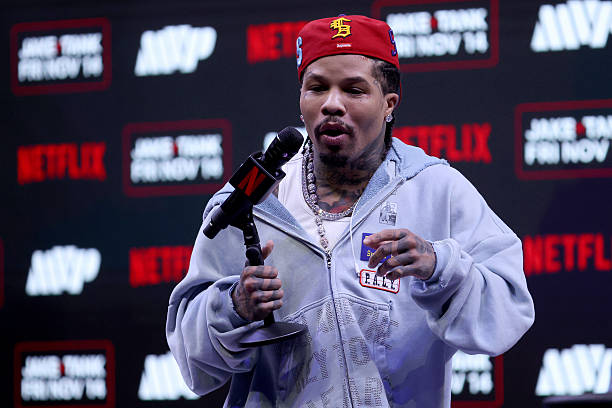
The $20 million ringwalk music faded before a single note could play. The monstrous, social-media-fueled spectacle that was Gervonta “Tank” Davis vs. Jake Paul, a collision of boxing purity and chaotic celebrity, is dead. It wasn’t felled by a promotional dispute, a petty injury, or even a trash-talking spiral gone too far. It was allegedly suffocated in the quiet darkness of a private home, miles from the screaming crowds and camera flashes. The fight is canceled not because of what happened in a gym, but because of what a civil lawsuit claims happened behind a locked door.
Let’s cut through the predictable noise. In late December, Gervonta Davis took to X, firing shots at Jake Paul, claiming “The Problem Child” was “getting his a** beat in camp” and blaming Paul’s MVP promotions for failing to “uphold nothing.” The posts, now deleted, were a masterclass in deflection. They were the frantic, last-ditch smokescreen of a man trying to steer the narrative toward sporting theatrics and away from a far more grim reality. Because the real knockout punch didn’t come from a fist—it came from a court filing.
The foundation of this fight crumbled in late October, when a civil lawsuit was filed against Davis by his ex-partner. The allegations within are not the typical tabloid fodder of athlete drama. They are specific, grave, and paint a picture of terror: battery, false imprisonment, and kidnapping. These aren’t words from rival promoters or disgruntled trainers. They are legal claims alleging a pattern of control and violence. In the high-stakes, image-obsessed world of a Jake Paul event, which orbits around morally simplistic hero-and-villain storytelling, this was a poison pill. How do you sell a “heroic” Jake Paul taking down a “villainous” Tank when the villainy alleged transcends boxing bravado and enters a realm of profound real-world harm?
Jake Paul’s response, calling Davis a “walking human piece of garbage” and “unprofessional,” while laced with his trademark hyperbole, underscores the impossible position this put the event in. Paul’s entire brand, for all its controversy, has recently leaned into a “boxing savior” narrative—taking on “real” fighters, advocating for fighter pay, and positioning himself as the disruptor of a corrupt sport. Sharing a multi-million dollar stage with someone facing these specific allegations would have instantly vaporized that carefully constructed persona. The backlash would have been immediate and unrelenting. The sponsors would have fled. The narrative would have been untouchable.
Here’s the raw, uncomfortable truth this cancellation forces us to confront: the modern boxing circus has its limits. We, the audience, will gladly buy into beefs built on stolen belts, disrespectful tweets, and even petty jealousy. We consume the drama. But there is a line, a threshold where the curated in-ring villainy collides with alleged off-ring inhumanity, and the facade shatters. The promotion couldn’t sell this as just another chapter in boxing’s bad-boy lore. The lawsuit transformed Davis from a dangerous pugilist into a legal defendant entangled in stories of alleged captivity and assault. That is a darkness no pay-per-view glow can illuminate.
The tragic irony is layered. Davis, arguably the most naturally gifted pound-for-pound boxer of his generation, has seen a career-defining financial and exposure windfall evaporate. It was stripped not by a superior fighter, but by his own alleged actions far from the sport’s bright lights. Meanwhile, Jake Paul, the disruptor often accused of hurting boxing, is ironically protected by this cancellation. It preserves his marketability and allows him to posture, however awkwardly, as the morally unblemished party.
The story of this canceled fight is no longer a sports story. It is a cautionary tale about the walls between athletic brilliance, personal conduct, and commerce. The arena for this battle shifted from the 24-foot squared circle to the court of public opinion and legal judgment. The bout wasn’t called off because someone wasn’t ready to fight. It was called off because the world outside the ropes finally, and forcefully, refused to be ignored. The alleged crime scene, not the boxing ring, became the decisive venue. And in that venue, there are no winners—only a staggering silence where the opening bell was supposed to ring.
Related Articles
“Fight of the Century Collapses? Tyson Fury vs. Anthony Joshua Suddenly OFF — What Really Happened Behind Closed Doors”
For years, it has been the fight that refused to die. Every...
“He’s the Only Fight That Matters!” — Pitbull Cruz’s Camp Declares War as 2026 Rematch Talks Explode
Boxing doesn’t wait for anyone. Momentum fades. Spotlight shifts. New names rise....
From Doubted to Crowned: How One Night in September Turned Him Into 2025’s Fighter of the Year
On February 13, 2026, the Boxing Writers Association of America made it...
“$100 Million on the Table — and Terence Crawford Still Said No: The Stunning Stand That Shook Boxing”
In a sport where legacies are often sacrificed for one last payday,...
- Transfer Updates
- Transfer Updates





















Leave a comment